


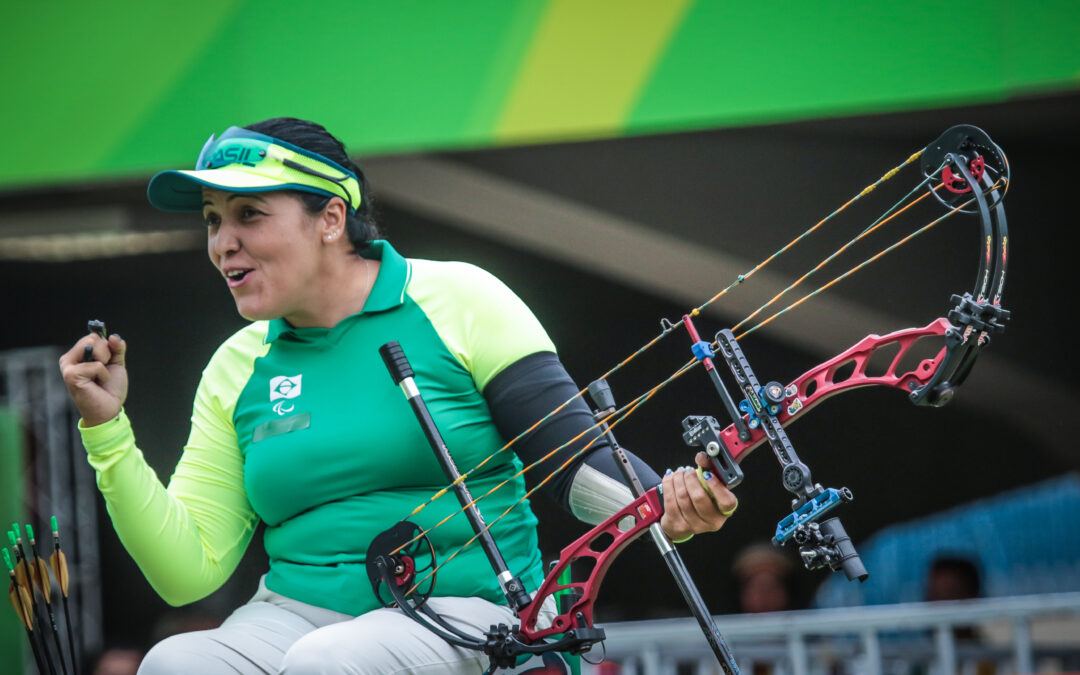
This International Women’s Day, the World Archery Americas Gender Equity Committee proudly highlights four exceptional women whose service, leadership, and dedication continue to strengthen our sport across the region.
Through athlete performance, judging, coaching,and leadership, they embody the true spirit of “Let’s Give to Gain.” Their commitment reminds us that when women give their time, expertise, and passion to sport, the entire archery community gains in excellence, in integrity, and in opportunity.
Today we honour: Jane Karla Gogel
If there is one name that stands out in Paralympic archery in Brazil, it is Jane Karla Gogel.
Gogel has been at the top of the world rankings, occupying first place in the compound women’s open in June 2018.
Some of her most notable achievements include her Parapan American title in Toronto 2015, three individual gold medals at the Parapan American Championships, a silver and a bronze at the World Archery Para Championships in Pilsen 2023, and fifth place at the Paris 2024 Paralympic Games.
With these sporting achievements, it is easy to think that the Brazilian began practicing archery as a child; however, her sporting career did not begin with a bow and arrow.
Start of a sporting career
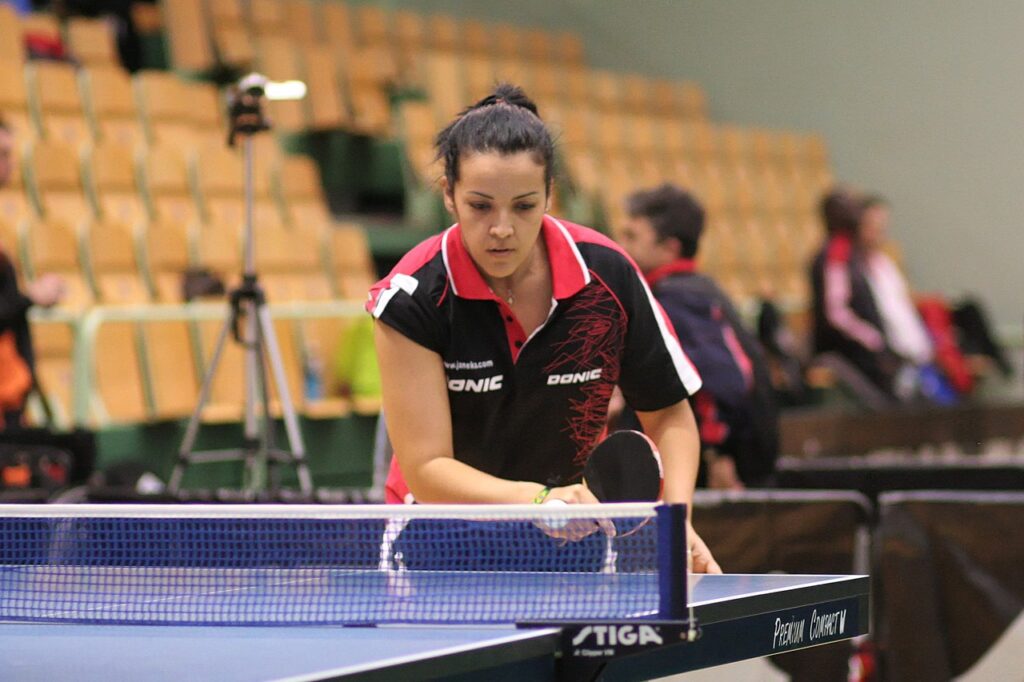
Gogel started out in table tennis, where she also excelled.
She won several titles, including two gold medals as Parapan American champion, competed in the Paralympic Games in Beijing and London, and was the first Brazilian woman to be ranked number three in the world.
However, her prominent career was temporarily clouded by health problems.
Gogel was diagnosed with breast cancer at the same time her mother was beginning treatment for the same disease.
“It was a very difficult time in my life. I stopped playing sports for a year to undergo treatment, including surgery, chemotherapy, and radiotherapy.,” said Gogel.
“After all this treatment, I managed to overcome the cancer, but my mother’s was more aggressive, and she did not survive. I suffered greatly; it was a huge loss for me.”
Eventually, Gogel made her return to table tennis during the period when Brazil was preparing its team for the Rio 2016 Games.
The best athletes were called up to train in Sao Paulo, which would mean moving away from her family.
“It was a very difficult decision to leave my children and my husband, after everything we had been through, and move to Sao Paulo to live alone.”
“At that moment, I decided to give up table tennis and look for another sport that I could do in my city and stay with my family.”
At the end of 2014, Gogel discovered archery and began training.
Her efforts soon paid off, and a few months later, she made it onto the Brazilian national team.
“My first international competition was the Arizona Cup in the United States in 2015, and I won. Since then, I’ve been a full-time archer.”
Gogel has been a member of the Brazilian para archery team since then, and this year she also made it onto the able-body compound team for the second time.
Challenges and motivation
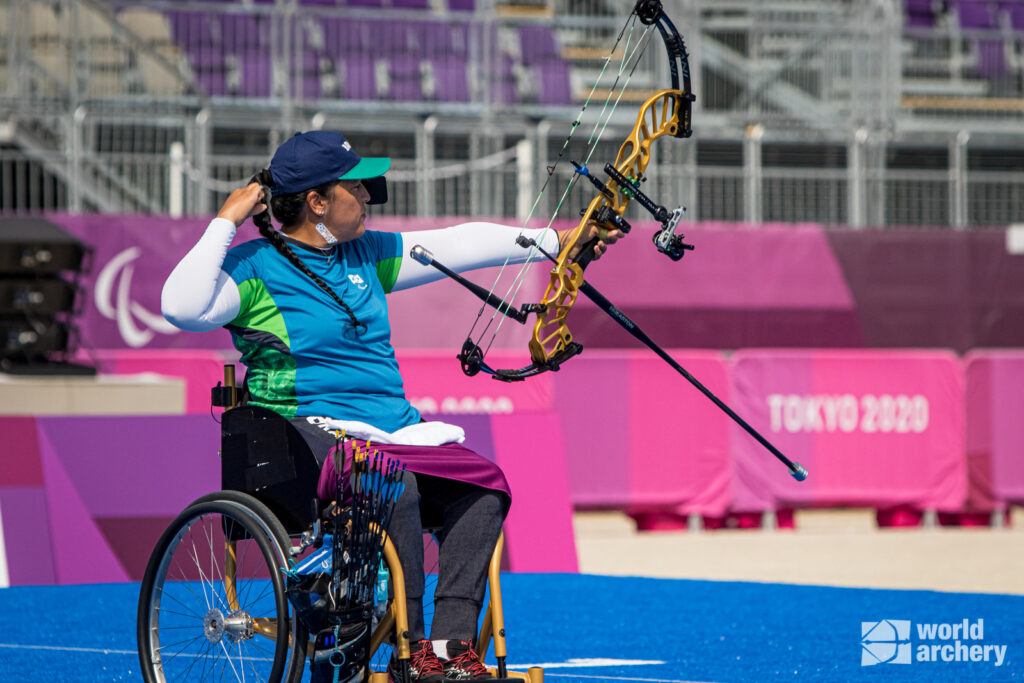
Jane Karla Gogel, like any other athlete, has constantly faced new challenges to stay fit and perform at her best in competitions.
A particularly difficult period for her was in 2020 during the pandemic.
“Finding a place to train was complicated, often training alone all day, as my husband and partner started working; before that, he was my full-time coach.”
Also during this period, she suffered a wrist fracture that kept her in rehabilitation for several months.
Fortunately, she recovered in time to continue preparing for the Tokyo Olympics.
“The most challenging thing is improving my training; I am constantly looking for ways to improve my technique.”
This quest for improvement led her once again to a crossroads between family and sport at the end of 2025.
“My idea was always to train close to my family. I always tried to make that happen and stay close to them, but sometimes life wants us to go a different path”
Since Gogel competed in table tennis, she tried to integrate her family and the practice of sport.
During this period of her life, she built a training room that later became an indoor 18m practice area.
When the family moved to Portugal in 2018, she was fortunate to have enough space to practice long distances, but most of the time since the pandemic began, she did so alone.
“I saw that I wouldn’t reach my goals this way. ”
So, the Brazilian once again made a very difficult decision, but this time she didn’t change sports.
Gogel decided to return to Brazil and train at the Paralympic center. Her son and husband stayed in Portugal, but her daughter accompanied her to Sao Paulo. There, she is following in her mother’s footsteps as a Paralympic table tennis athlete.
“It was never easy to make that decision because to have my family close is very important to me.”
Looking to the future
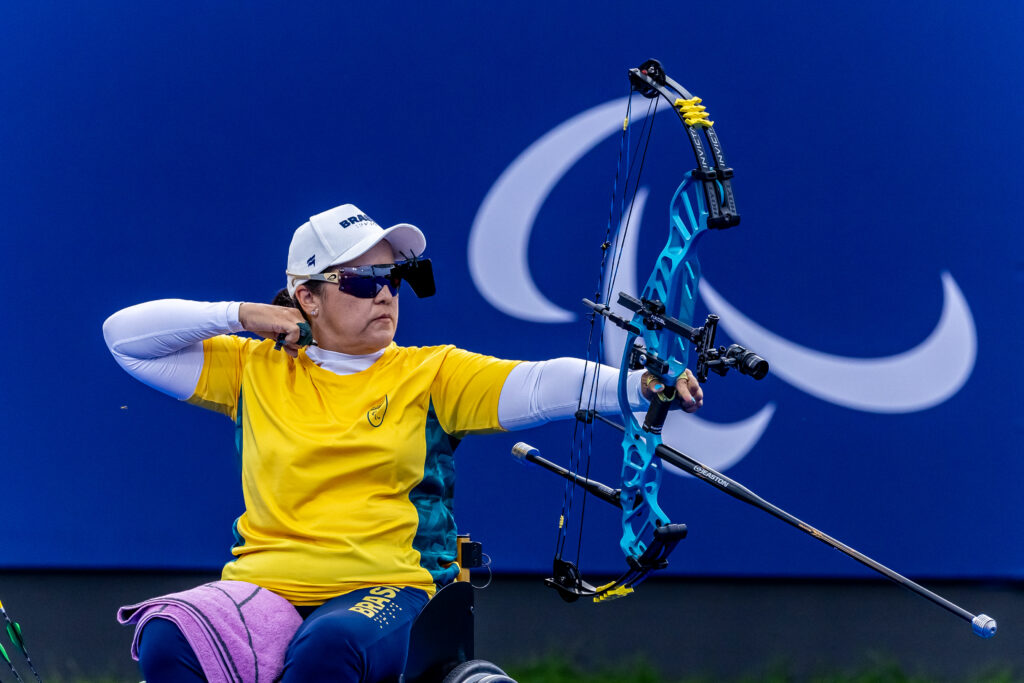
In archery, Gogel has competed in three Paralympic Games: Rio 2016, where she finished fifth; Tokyo 2020, where she finished ninth; and Paris 2024, her best result so far along with Rio.
“I have achieved several of the biggest goals you can have in a sport, but the Paralympic medal is still missing, so that is the big dream.”
LA 2028 is this opportunity for the Brazilian, who is undoubtedly a symbol of perseverance and a great role model.
Gogel has this message for the future girls who will represent our sport:
“Follow your dreams with passion and dedication. Whenever there is a difficulty coming up, adapt and change whatever necessary and then continue. Look for the top to learn and copy what they do and don´t let anyone discourage you.”