

This International Women’s Day, the World Archery Americas Gender Equity Committee proudly highlights four exceptional women whose service, leadership, and dedication continue to strengthen our sport across the region.
Through athlete performance, judging, coaching,and leadership, they embody the true spirit of “Let’s Give to Gain.” Their commitment reminds us that when women give their time, expertise, and passion to sport, the entire archery community gains in excellence, in integrity, and in opportunity.
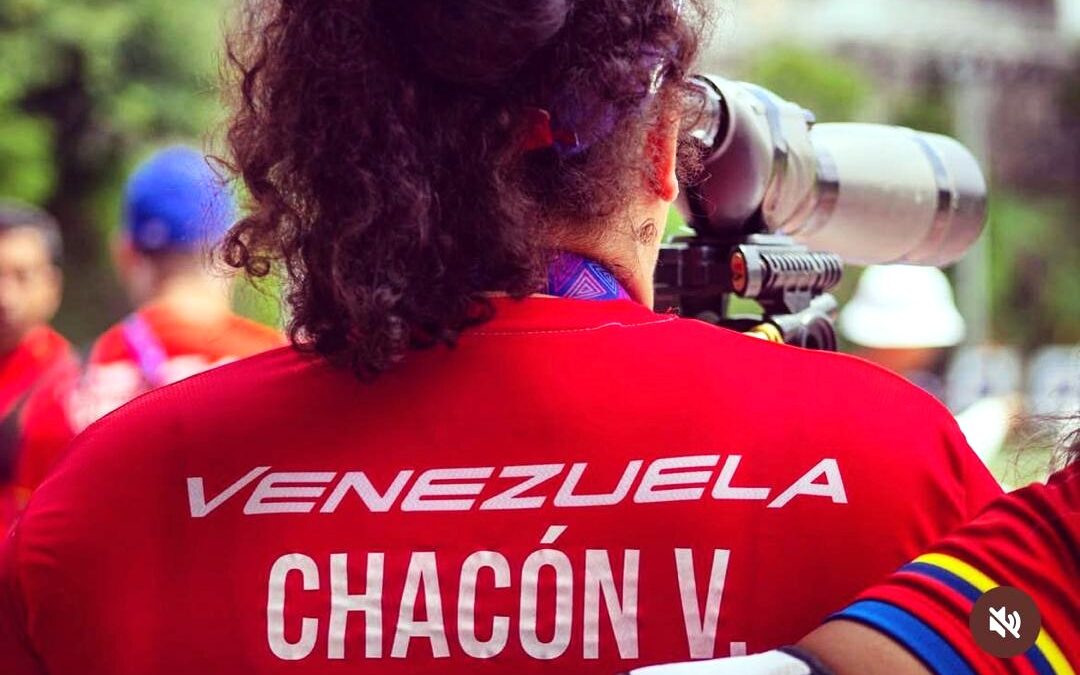
Today we honour: Vanessa Chacón.
One of the most iconic moments in the history of the Olympic Games was the opening ceremony of the 1992 Barcelona Games.
When Paralympic archer Antonio Rebello shot a flaming arrow to open the Games, he did more than just light the Olympic cauldron; without realizing it, he sparked an interest in archery in Venezuelan Vanessa Chacon.
That spark never died out, and four years later it was reignited when Chacon watched USA’s archer Richard Andrew (Butch) Johnson compete at Atlanta ’96.
Inspired by the precision and grace of the sport, the Venezuelan decided to start training in 1998.
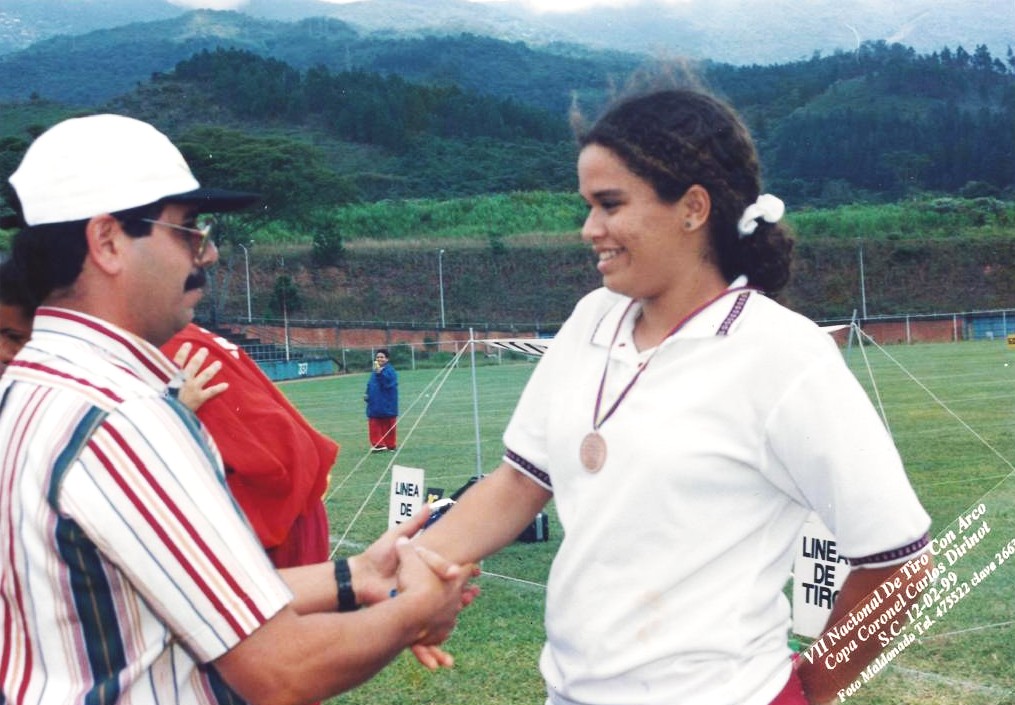
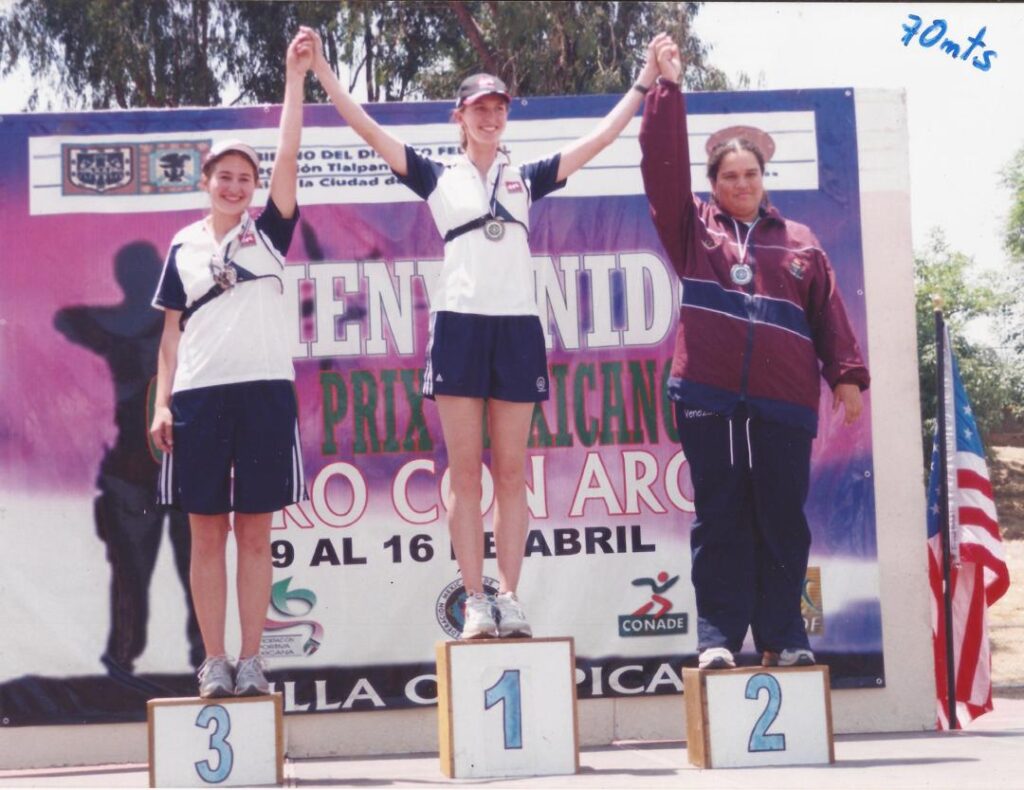
Over the next 16 years, Chacon won several medals for her country in various continental competitions, such as the South American and Pan American Championships, as well as regional games like the Central American and Caribbean Games, the Bolivarian Games, and the South American Games.
But in 2014, her athletic career came to an abrupt halt, not because of a competition, but due to an accident off the shooting range.
While waiting for the university bus, a push from a stranger caused a severe tear in her shoulder muscles.
Without access to affordable therapy and in the midst of what she considers a leadership vacuum within the Venezuelan Archery Federation, Chacon was forced to retire.
However, her love for the sport never waned.
“I love this discipline and wanted to give back what I received,” Chacon said. “I didn’t want to keep the knowledge I gained over 16 years to myself.”
So she transitioned from athlete to coach, a role that would present new challenges, especially as a woman in a field where men continue to dominate the coaching ranks.
The Invisible Barrier
Chacon’s career as a coach began quite naturally.
After taking a year off from training due to an injury, she started going to the field to help out wherever needed.
Gradually, she began coaching beginners, drawing on the skills she had honed as an athlete.
During the pandemic, she pursued formal studies and completed a three-level diploma in high-performance sports training accredited by the Venezuelan Ministry of Sports and the Universidad del Sur.
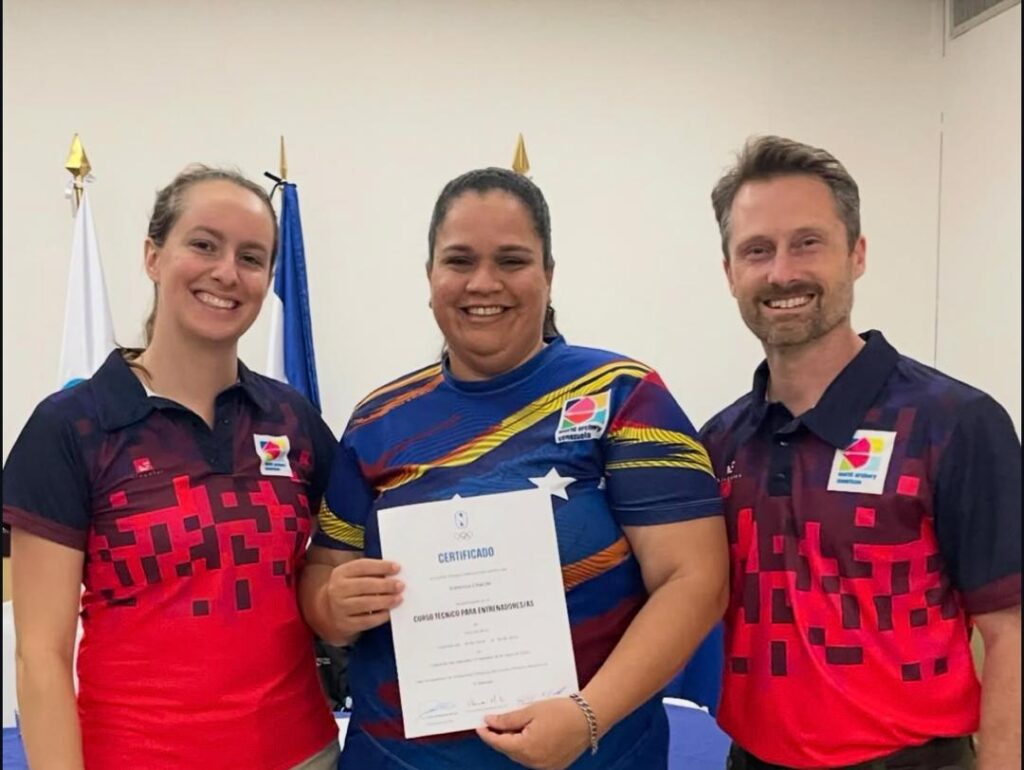
She also completed a women’s coaching course funded by the International Olympic Committee in El Salvador, as well as World Archery’s online course focused on women in sports.
Despite her qualifications and experience, gaining recognition has not been easy for her.
“Most coaches in my country—who are mostly men—don’t recognize me as their equal,” Chacon said.
The Venezuelan notes that prejudice isn’t always obvious; rather, it often manifests itself in subtle ways.
“Sometimes they say I don’t have experience,” she said with a mix of frustration.
“But I tell them: I’ve been in this sport for 28 years. You’ve been here just as long, but you haven’t produced a single elite athlete. You didn’t train your state’s gold medalists.”
Moving Forward with Actions, Not Words
Chacon believes that a paradigm shift does not come from discussions, but from results.
“Attitudes can change through actions, not words,” she said.
And she has proven this through her consistent work.
Since 2023, she has led the Venezuelan national team to major international competitions, including the Central American and Caribbean Games in San Salvador, the Pan American Games in Santiago, and the Bolivarian Games in Lima last year.
She has also accompanied the youth team to prestigious tournaments such as the 2025 Pan American Youth Games in Asuncion.
“It’s been hard work since we started working with the national team,” she said.
“Most of the athletes on the national team are former teammates from when I was an athlete, and it’s difficult to make that transition; but with a lot of hard work and effort, we’re achieving our goals, especially with the younger players who are hungry to win and be the best.”
Her coaching approach is deeply rooted in observation and empathy, qualities she attributes to her perspective as a woman.
“I believe I bring something different to the game,” she explains. “I’m very observant, and I’ve learned to connect with athletes of all ages. That’s something I bring to the table, and it sets me apart.”
Chacón is a staunch advocate for gender equality in the field of coaching. “Anyone, regardless of gender, who loves our discipline—and sports in general—should continue working to teach future generations how exciting and beautiful our sport is,” she affirms.
The Venezuelan noted that in her country, cultural attitudes continue to favor male authority figures in sports, even among her female colleagues, and she points out that machismo persists in some circles.
Even so, she remains hopeful. “I’ve managed to get one of the [colleagues] who used to attack me by saying I didn’t know anything to change his mind. I proved it to him with facts.”
Chacon’s story is not just a tale of personal triumph, but a testament to the strength of women in sports.
Her journey reflects a broader struggle across our continent and beyond: the struggle for women to be seen not only as participants, but as leaders.