


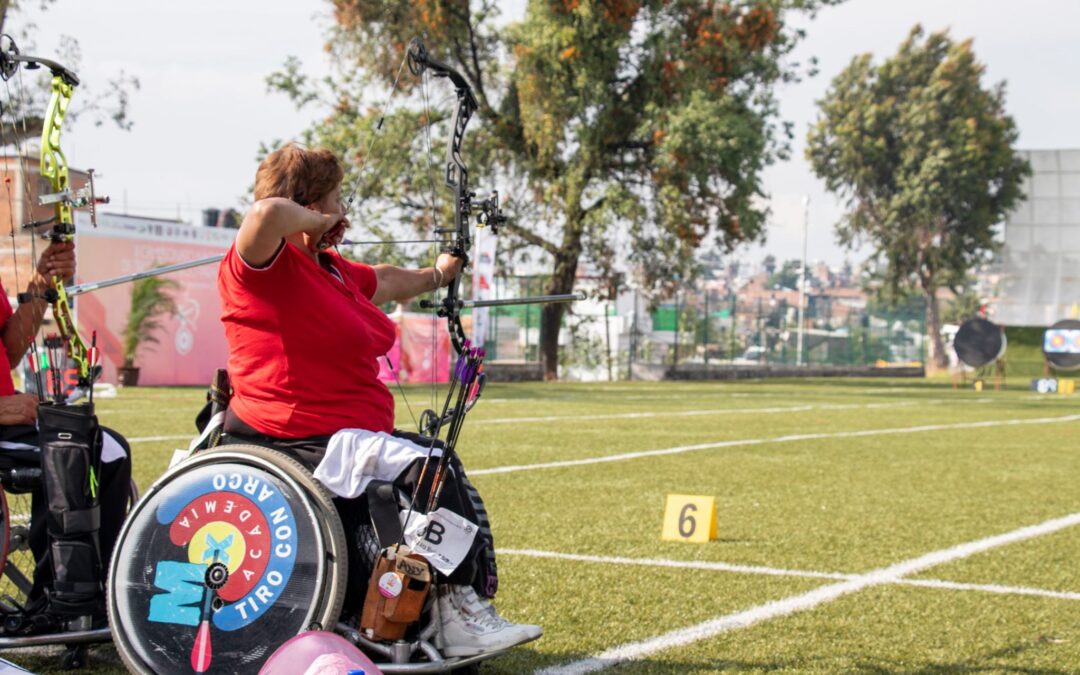
On the occasion of International Women’s Day, World Archery Americas recognizes the achievements of women who have left their mark on archery. Whether on the field, in officiating, leadership, or training new generations, their work has been essential to the sport’s growth in the Americas.
In the world of Paralympic sport, some figures emerge as examples of perseverance. Ana María Tenorio, Mexican Paralympic archer, is one of them. Her trajectory in para-archery has not only taken her to the sport’s elite, but has also inspired new generations of athletes with and without disabilities to pursue their dreams.
Before excelling in archery, Tenorio also practiced athletics in track and field in different modalities such as wheelchair racing, shot put, discus and javelin. She also practiced swimming and wheelchair basketball. But for her, the greatest achievement of her sports career was when she was convinced that she was born for archery.
A path of determination and effort
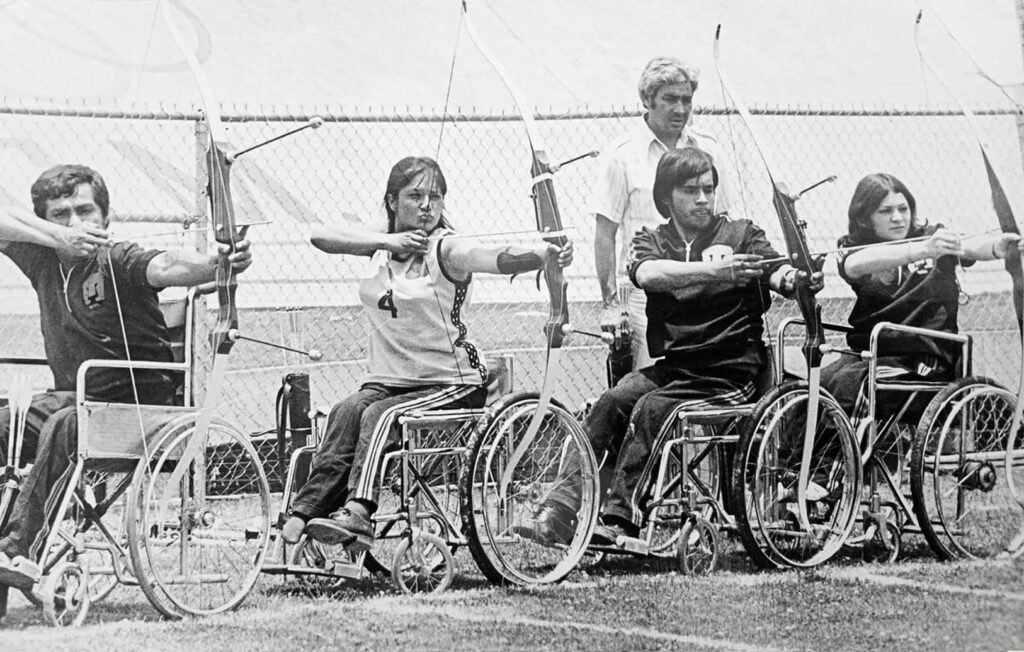
Ana María discovered archery in 1973, when she attended the National Autonomous University of Mexico. Although she didn’t like it at first, her coach Sergio Duran motivated her to train with discipline, which led her to excel quickly. In 1975, she won a silver medal in the Pan American Wheelchair Games, an achievement that consolidated her as one of Mexico’s best athletes.
However, her path in the sport was not an easy one. Since she was a child she faced barriers due to the lack of accessibility in education and society. “When I entered elementary school in a regular public school, they would never let me go down to the playground. I was left guarding the classroom or the backpacks while I watched others play,” Tenorio recalled. Her life changed when she entered a school for children with motor disabilities, where she got her first taste of sports. “One day a physical education teacher arrived and gave us a ball to play with. It was a tremendous emotion, something wonderful,” she said of her start in wheelchair basketball.
Archery represented a different challenge, as it demanded concentration and patience, but over time she learned to see it as a transformative tool. “I really didn’t like archery, because it was a sport that required a lot of concentration and, above all, we couldn’t talk or encourage the competitors. We always had to be quiet and still,” she admitted. However, thanks to her coach’s insistence, she turned it into her passion and her greatest sporting achievement.
Achievements and legacy
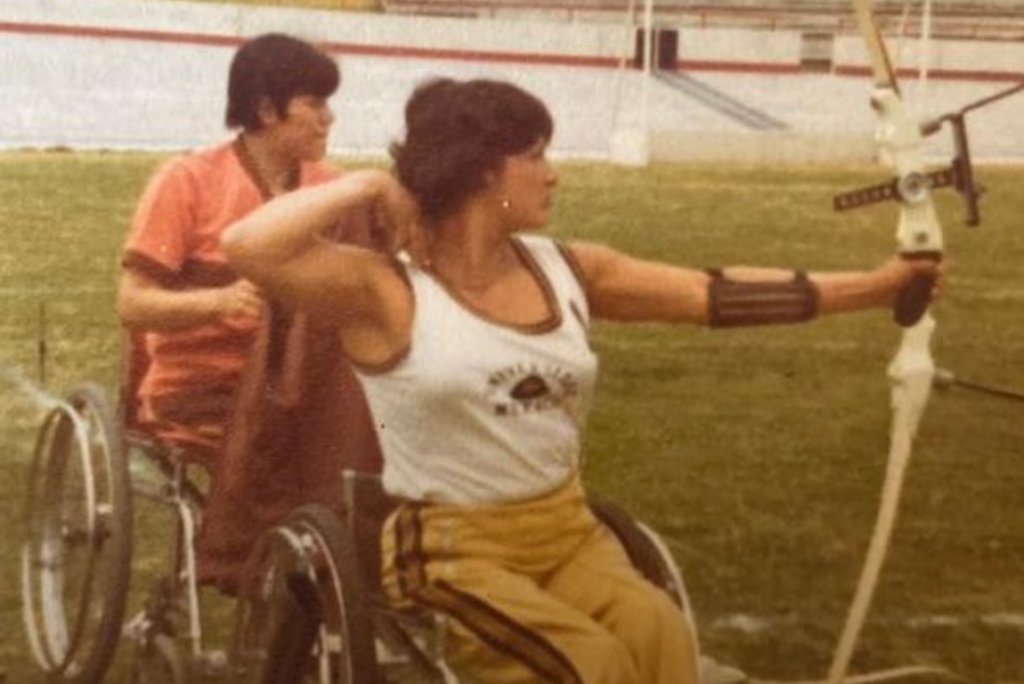
Tenorio has had a long career in archery from the 1970s to the present. She represented Mexico at the Pan American Wheelchair Games in 1975 and 1978, in addition to the 1976 Toronto Paralympic Games. In contrast, in 2018, she competed in the Parapan American Championships where she won a silver medal in mixed teams, proving that her talent and passion for the sport still lives on decades after her debut.
Her influence has transcended generations, as her daughters Ana Ivette and Sandra Loza Tenorio have also excelled in archery. Ana Ivette won gold at the 2000 Pan American Championships, while Sandra is currently a coach, training new talent, such as Paralympic archer Samuel Molina. “My daughters were born loving this sport and managed to excel at this level,” Tenorio said proudly.

Inspiring future generations
Ana Maria Tenorio’s story is a reminder of the impact of effort and resilience. She has also advocated for inclusion in adapted sport, highlighting the importance of accessibility. “ Anyway one adapts and manages to cope with architectural barriers, however I do believe that this is a big barrier for many people with disabilities.” stated Tenorio.
Tenorio also believes that the visibility of athletes with disabilities in the media is another difficulty they face. “The lack of coverage in the media means that there is ignorance and that generates fear. Fear of investing in projects that include people with disabilities because they think we can’t.”.
Archery has allowed her to teach and share the “magic” of this sport with people with and without disabilities, fostering values such as discipline, respect and perseverance. “My greatest achievement is to leave this legacy to my daughters and others who share the same mission that life has given me: to be archers to transform and help the community through archery,” he concluded.
Her greatest legacy is not only her success in competition, but her contribution to the transformation of adapted sport in Mexico and her role in inspiring new generations.